Why Get SOC 2 Before Series A? A Founder's Guide
Getting SOC 2 before Series A accelerates fundraising and unlocks enterprise deals. Learn how to be audit-ready in 24 hours, not months.
You're three weeks out from your Series A close. The term sheet looks good. Then your lead investor's associate sends over a due diligence checklist, and there it is: "Please provide your SOC 2 report or current compliance status."
For many founders, this question triggers a moment of panic. And if you're selling to enterprise customers, you've probably already heard some version of: "We love your product, but we can't sign until you're SOC 2 compliant."
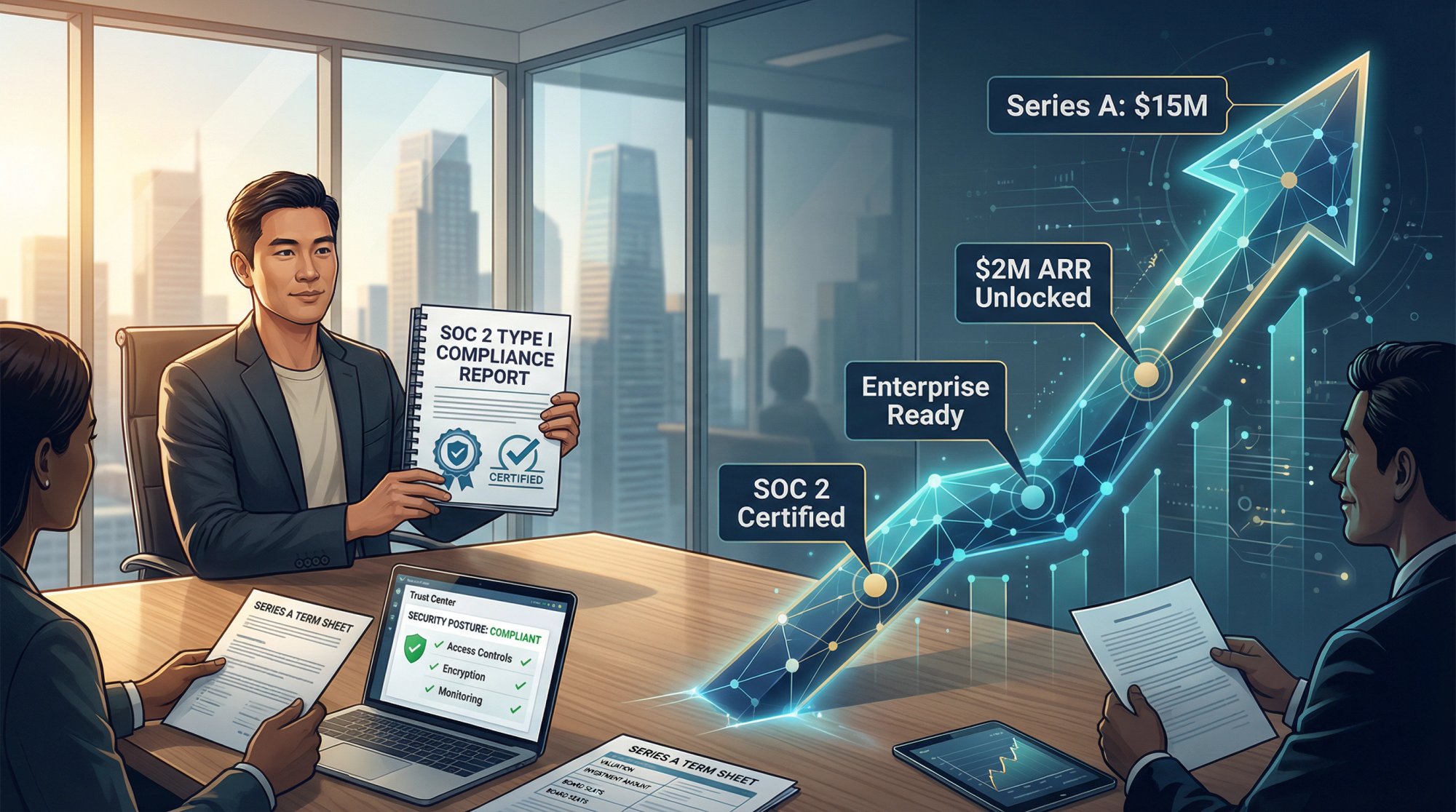
Most founders don't realize until it's too late: SOC 2 before Series A isn't just about checking a box. It's a strategic move that can accelerate your fundraise, unlock enterprise revenue, and signal to investors that you're building a company with real staying power.
The good news? Getting SOC 2 no longer takes 6 to 12 months or costs $50,000. With the right approach, you can be audit-ready in as little as 24 hours. We'll show you exactly how.
Why Do Investors Ask About SOC 2 in Due Diligence?
The venture capital world has changed. Five years ago, investors rarely asked about compliance during Series A due diligence. Today, it's becoming standard, especially for startups handling customer data, building AI products, or targeting enterprise customers.
Why the shift? A few factors are driving this:
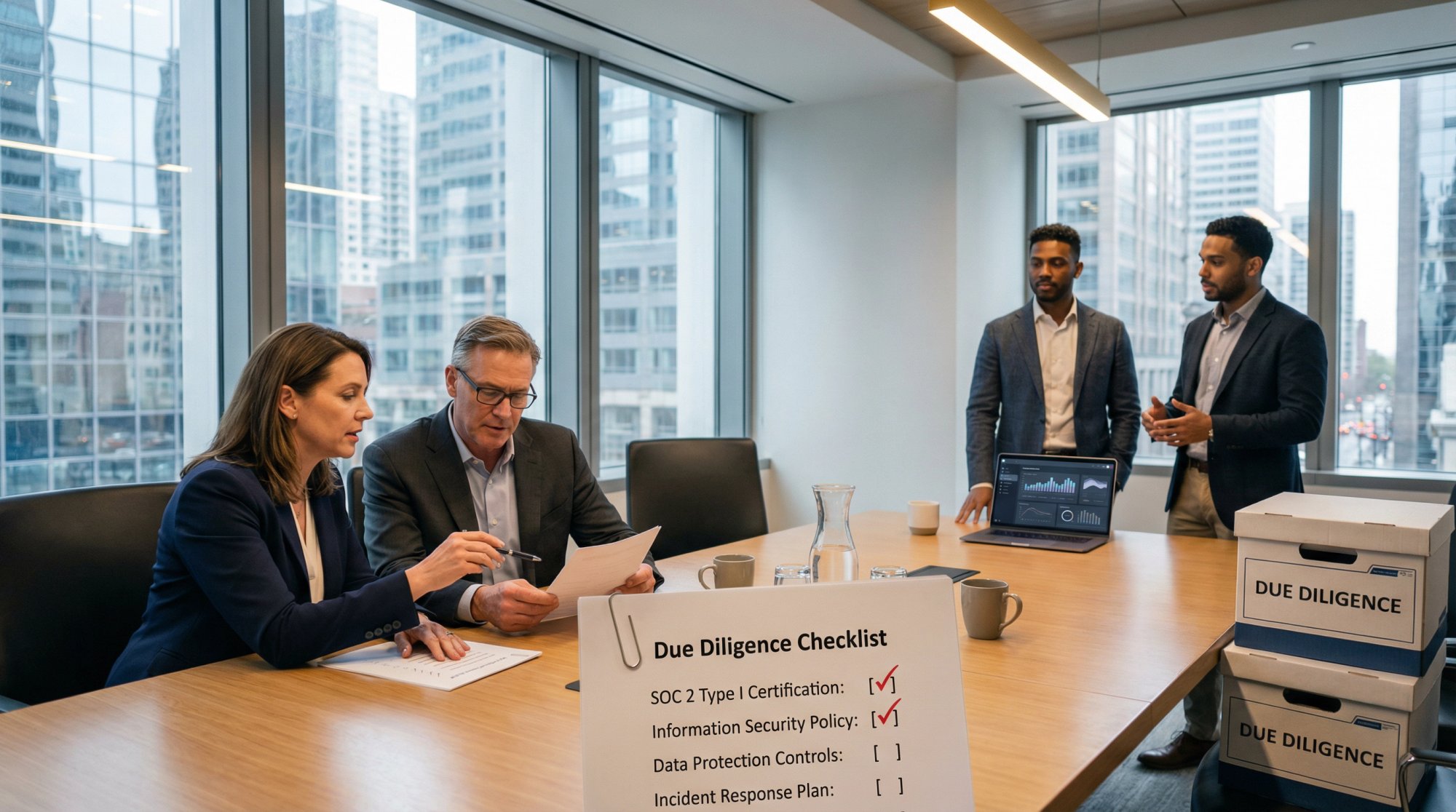
Portfolio risk management has evolved. VCs have seen enough data breaches and security incidents to know that a portfolio company's compliance posture directly impacts their investment. A startup that handles sensitive data without proper controls is a liability waiting to happen. Implementing a robust information security policy from the start addresses these concerns head-on.
Enterprise buyers are more demanding. Investors know that your path to meaningful revenue likely runs through enterprise customers. And enterprise procurement teams have gotten stricter about their security requirements. If you can't pass their security review, you can't close deals, which means you can't hit the growth targets that justify your valuation.
AI and data-intensive startups face extra scrutiny. If your product involves machine learning, handles personal data, or integrates deeply with customer systems, investors will want to see that you're taking security and compliance seriously from day one. SOC 2 is one of the clearest signals you can send.
The practical implication? Walking into an investor meeting with your SOC 2 Type I already in hand (or at least in progress) removes a potential objection before it comes up. It demonstrates operational maturity and forward thinking, qualities that separate fundable startups from the rest.
How SOC 2 Impacts Enterprise Sales Velocity
Let's talk about what SOC 2 actually means for your revenue.
Picture this scenario: Your sales team has been working a deal for months. The champion loves your product. The economic buyer is ready to sign. Then the deal hits procurement and security review, and everything stops.
The security team sends over a questionnaire. They ask for your SOC 2 report. You don't have one. The conversation shifts from "when can we start?" to "come back when you're compliant."
This happens constantly. And the cost isn't just the delayed deal. It's the deals you never even get to pursue because word spreads that you can't pass security review.
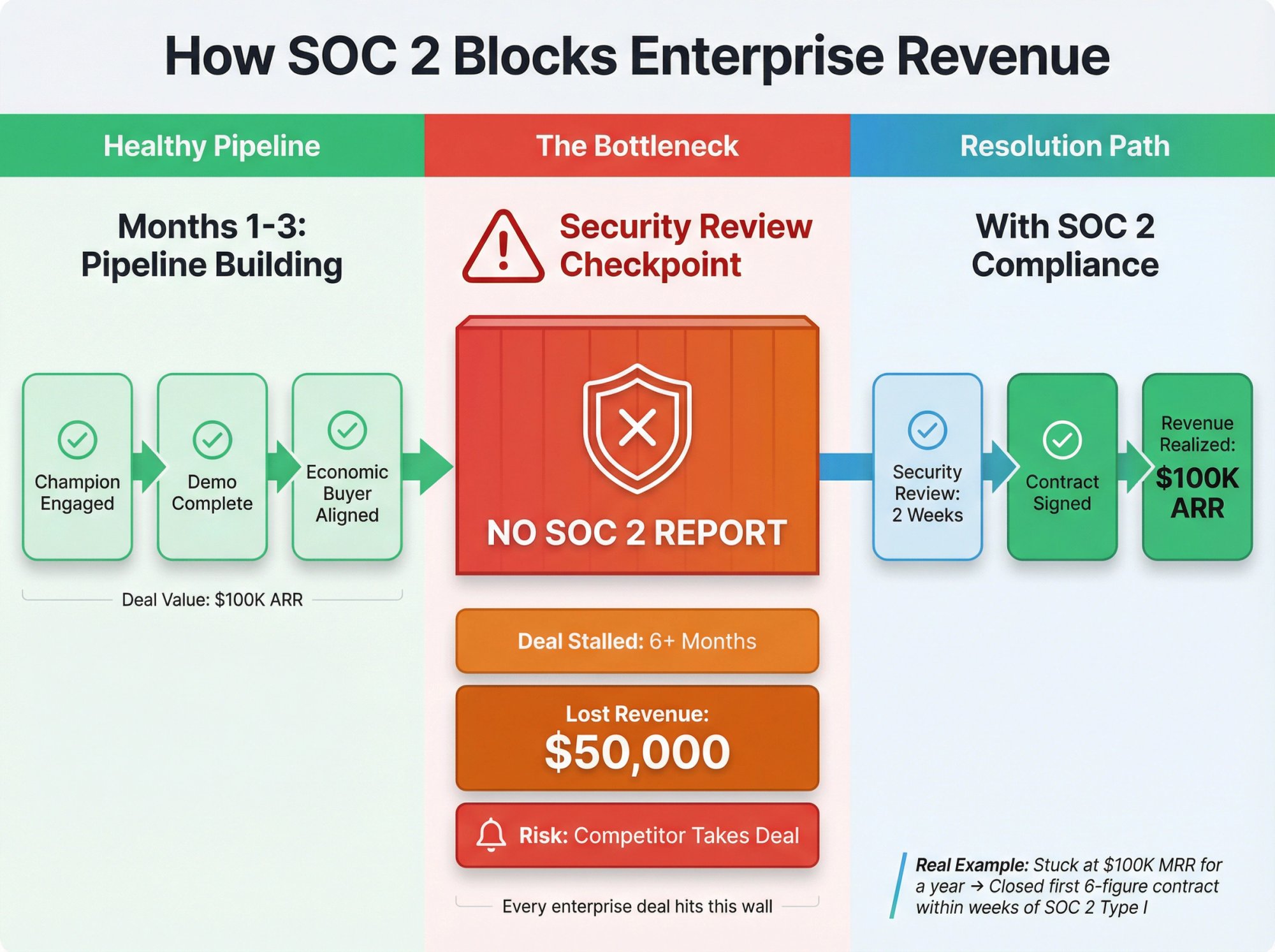
Consider the math: If just one enterprise deal worth $100,000 in annual contract value gets delayed six months because you don't have SOC 2, that's $50,000 in lost revenue. If the deal falls through entirely because a competitor who is compliant swoops in, you've lost the entire contract plus the potential expansion revenue over the lifetime of that customer.
One startup that came to us had been stuck at around $100,000 in monthly recurring revenue for nearly a year. Not because of product issues or sales execution, but because every enterprise deal kept stalling at security review. Within weeks of getting their SOC 2 Type I, they closed their first six-figure enterprise contract. The compliance investment paid for itself many times over.
The bottom line: For B2B startups targeting mid-market and enterprise customers, SOC 2 isn't a nice-to-have. It's table stakes for the deals that will actually scale your business. Our SOC 2 checklist for SaaS startups breaks down exactly what you need at each stage.
SOC 2 Type 1 vs Type 2: Which Do Pre-Series A Startups Need?
This is where a lot of founders get confused, so let's clear this up. Understanding the SOC 2 Type 1 vs Type 2 distinction is crucial for making the right decision.
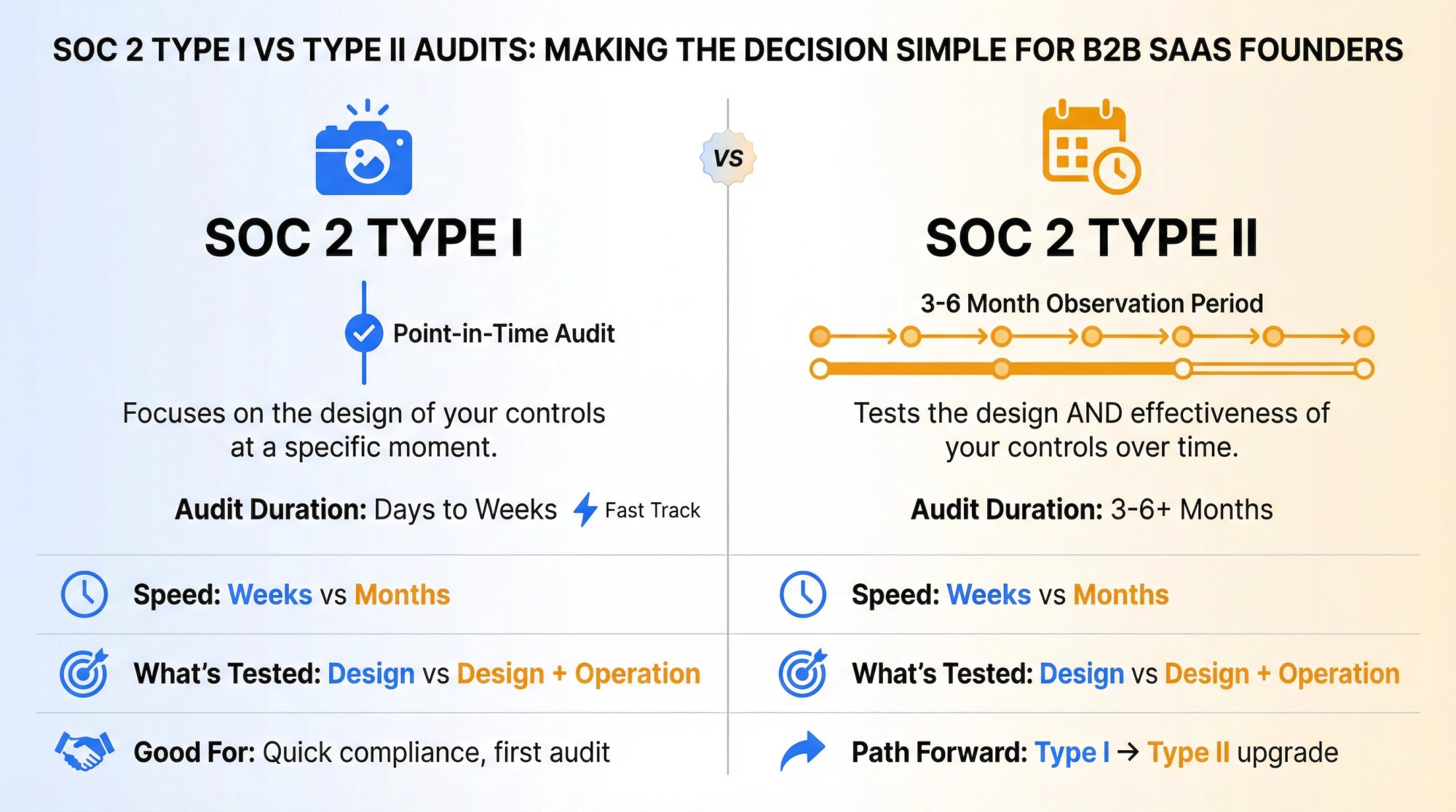
SOC 2 Type I evaluates whether your security controls are properly designed at a specific point in time. Think of it as a snapshot: the auditor verifies that you have the right policies, procedures, and technical controls in place on the day of the audit.
SOC 2 Type II goes further. It evaluates whether those controls operated effectively over a period of time, typically three to six months. This requires an observation period where your controls are monitored continuously.
For most Series A startups, Type I is the right starting point. Here's why:
- Speed matters. Type I can be completed in weeks (or even days with the right platform). Type II requires a multi-month observation period that you may not have time for.
- Type I satisfies most initial requirements. When an enterprise customer or investor asks "are you SOC 2 compliant?", a Type I report answers that question. It demonstrates that you've built your security program correctly.
- Type I puts you on the path to Type II. Once you have Type I, you can begin your observation period immediately. Many startups complete Type I, use it to close deals and raise funding, then complete Type II several months later.
- It's still a meaningful credential. Don't let anyone tell you Type I doesn't count. It's a full audit conducted by a licensed CPA firm. The controls you implement for Type I are the same controls required for Type II.
The Strategic Play for Series A: Get your Type I done before you start your fundraise. Use it to accelerate enterprise deals and demonstrate operational maturity to investors. Then plan for Type II completion in the quarters following your raise.
Why Traditional SOC 2 Timelines Don't Work for Startups
The uncomfortable truth about traditional SOC 2 compliance: it was never designed for startups. Understanding how long SOC 2 compliance takes with traditional methods explains why so many founders put it off.
The conventional approach looks something like this:
\-> Months 1 through 2: Hire a consultant or GRC platform. Do a gap assessment. Figure out what controls you're missing.
\-> Months 3 through 4: Write dozens of security policies. Implement missing controls. Train your team.
\-> Months 5 through 6: Collect evidence, screenshots, and logs for every control. Prepare for the audit.
\-> Months 7 through 9 (or longer): Go through the actual audit. Address findings. Get your report.
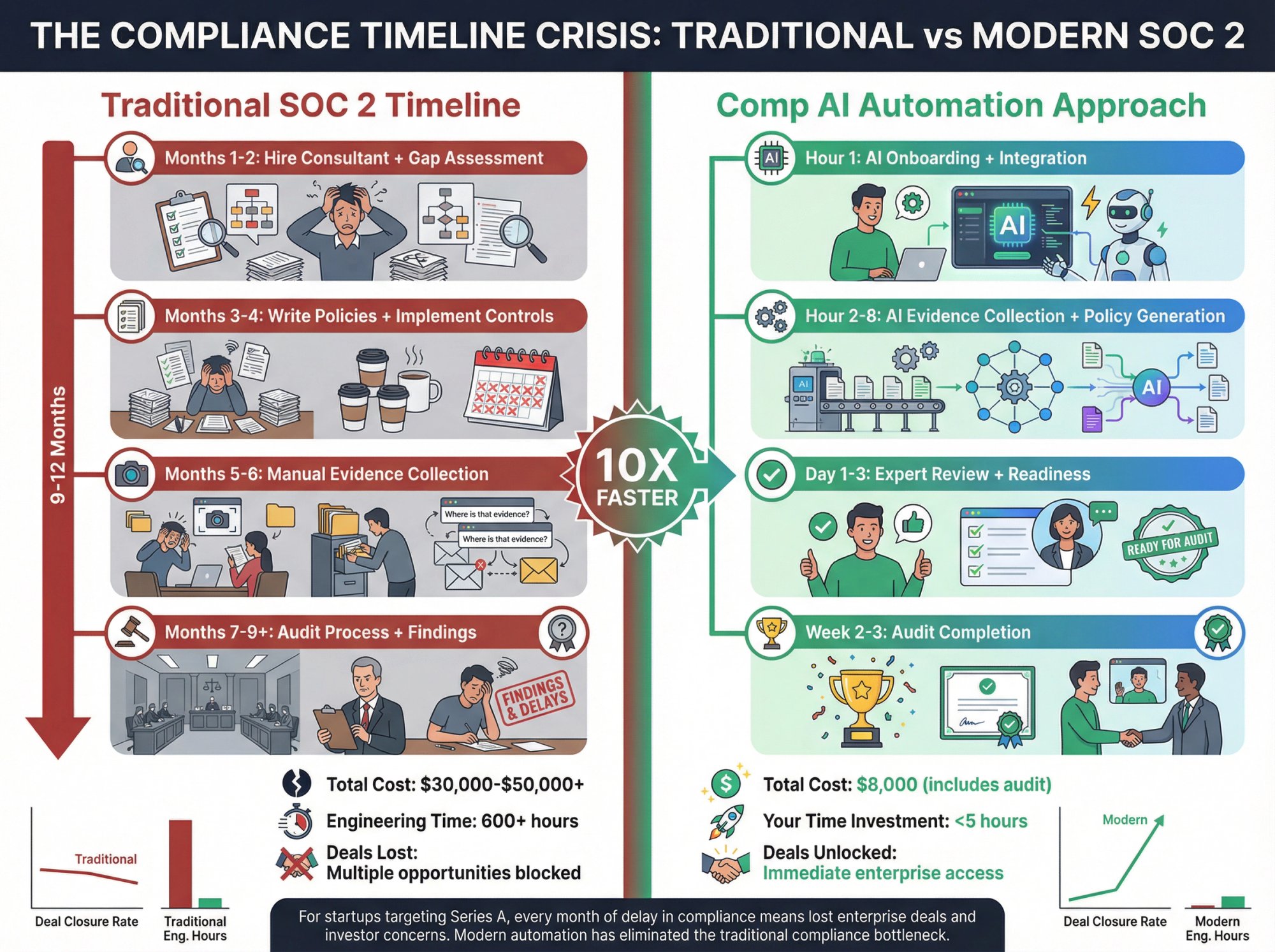
Total timeline: Six to twelve months, if everything goes smoothly. Total cost: Often $30,000 to $50,000 or more when you factor in consultant fees, audit costs, and the engineering time your team spends on compliance instead of building product.
For a startup trying to close a Series A in Q2, this timeline is a death sentence. You can't tell investors "we'll have SOC 2 in nine months." You can't tell enterprise customers "check back next year."
But the traditional timeline isn't the only option anymore. Modern compliance automation platforms have changed the equation entirely.
The question you should be asking isn't "can we afford to do SOC 2 this fast?" It's "can we afford not to?"
What Does SOC 2 Require? (Breakdown + Automation Tips)
Before we talk about how to speed things up, let's break down what SOC 2 actually involves. Understanding the SOC 2 compliance requirements helps you see where automation makes the biggest difference.
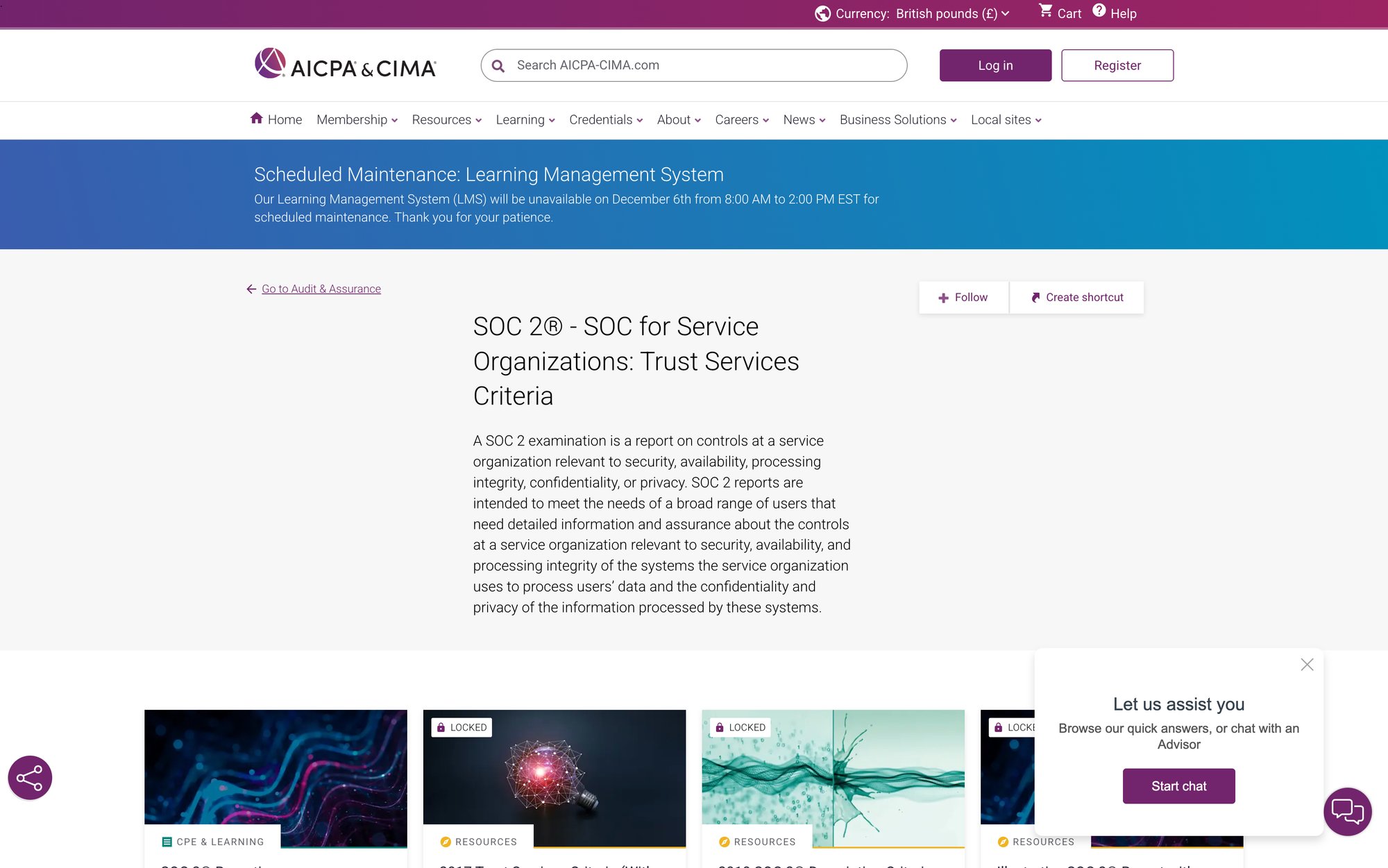
SOC 2 is based on five Trust Service Criteria defined by the AICPA:
| Trust Service Criteria | What It Covers |
|---|---|
| Security | Protection against unauthorized access (always required) |
| Availability | System uptime and operational reliability |
| Processing Integrity | Accurate and complete data processing |
| Confidentiality | Protection of confidential information |
| Privacy | Collection and handling of personal information |
Most startups start with Security only (sometimes called the "Common Criteria"), then add additional criteria based on customer requirements.
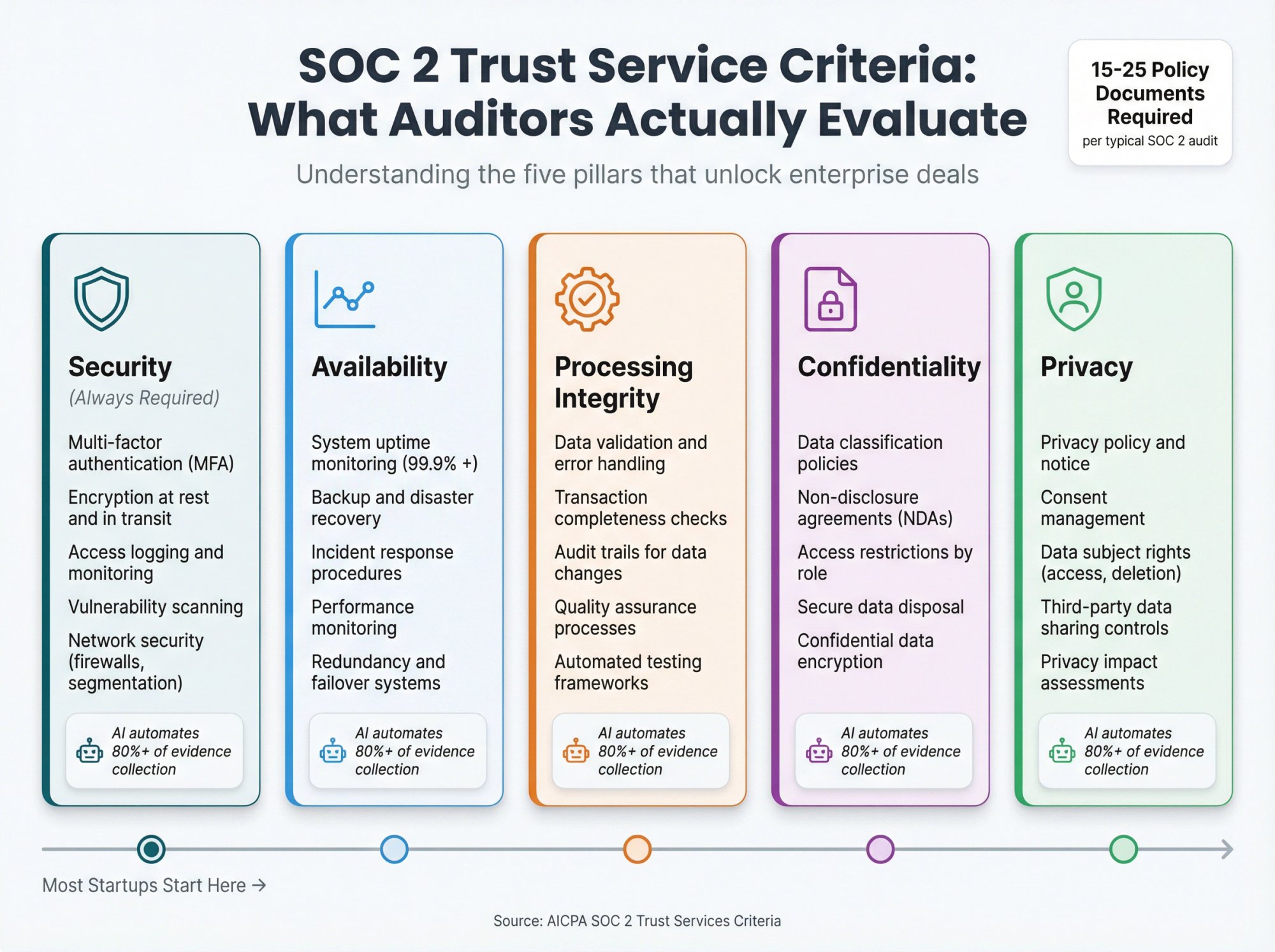
Within each criteria, you need three things:
1. Policies and procedures. Written documentation that describes how your company handles security. Access control policies, incident response plans, data classification guidelines, and so on. A typical SOC 2 audit requires 15 to 25 different policy documents.
2. Technical controls. The actual security measures you've implemented. Multi-factor authentication, encryption, access logging, vulnerability scanning, backup procedures. Your auditor will verify that these controls exist and are configured correctly.
3. Evidence of control operation. This is where traditional compliance becomes a time sink. You need to prove that your controls actually work. That means screenshots, system exports, logs, and configuration files for every single control. We're talking hundreds of individual evidence items.
Policies can be templated and customized. Technical controls can be implemented in days. But evidence collection? That's where startups traditionally lose weeks or months of engineering time.
Every time you need a screenshot of your AWS security group configuration, that's an engineer pulling away from product work. Every access review requires manual spreadsheets. Every quarterly review means someone spending hours documenting what happened.
This is exactly where AI and automation transform the equation. Modern automated compliance software can connect directly to your infrastructure (AWS, GCP, Azure, GitHub, Google Workspace, Okta, and dozens of other systems) and pull evidence automatically. What used to take 600+ hours of manual work can be reduced to near zero.
How Much Does SOC 2 Cost for Early-Stage Startups?
Let's get specific about numbers, because "compliance is expensive" isn't helpful when you're trying to budget. A detailed SOC 2 cost breakdown reveals where the money actually goes.
Traditional SOC 2 Costs Breakdown
| Cost Component | Traditional Range |
|---|---|
| GRC Consultant or vCISO | $20,000 to $50,000+ |
| Audit Fees (CPA Firm) | $10,000 to $20,000 |
| Engineering Time (200-600 hours at $150/hr) | $30,000 to $90,000 |
| Policy Writing and Documentation | $5,000 to $15,000 |
| Total | $65,000 to $175,000+ |
And that's just for your first year. Maintaining compliance and completing subsequent audits adds ongoing costs.
Automated SOC 2 Platform Pricing
Price with Comp AI: Starting at $8,000 (platform + audit included) | Price with others: $25,000 to $50,000+
The difference isn't just about platform fees. It's about what's included:
With Comp AI, that pricing includes:
- Complete platform access with 100+ integrations
- AI-generated policies customized to your business
- Automated evidence collection (continuous, not manual)
- Dedicated compliance team support via Slack
- Pre-vetted auditor coordination (audit fees included)
- Real-time trust center for customer-facing security documentation
When you factor in the engineering time saved, the total cost difference becomes even more dramatic. We've seen startups save 2,500+ hours of work that would have otherwise fallen on their engineering team.
For a pre-Series A startup watching every dollar, this matters. You're not just saving money; you're preserving the engineering capacity you need to ship product and hit the milestones that actually drive your fundraise. Use our SOC 2 cost estimator to get a personalized breakdown for your company.
How to Get SOC 2 Audit-Ready in 24 Hours
Now let's talk about how this actually works, because "24 hours to audit-ready" sounds too good to be true until you understand the approach.
Comp AI was built specifically for the problem we've been describing: startups that need SOC 2 fast, without sacrificing quality, and without draining their engineering team.
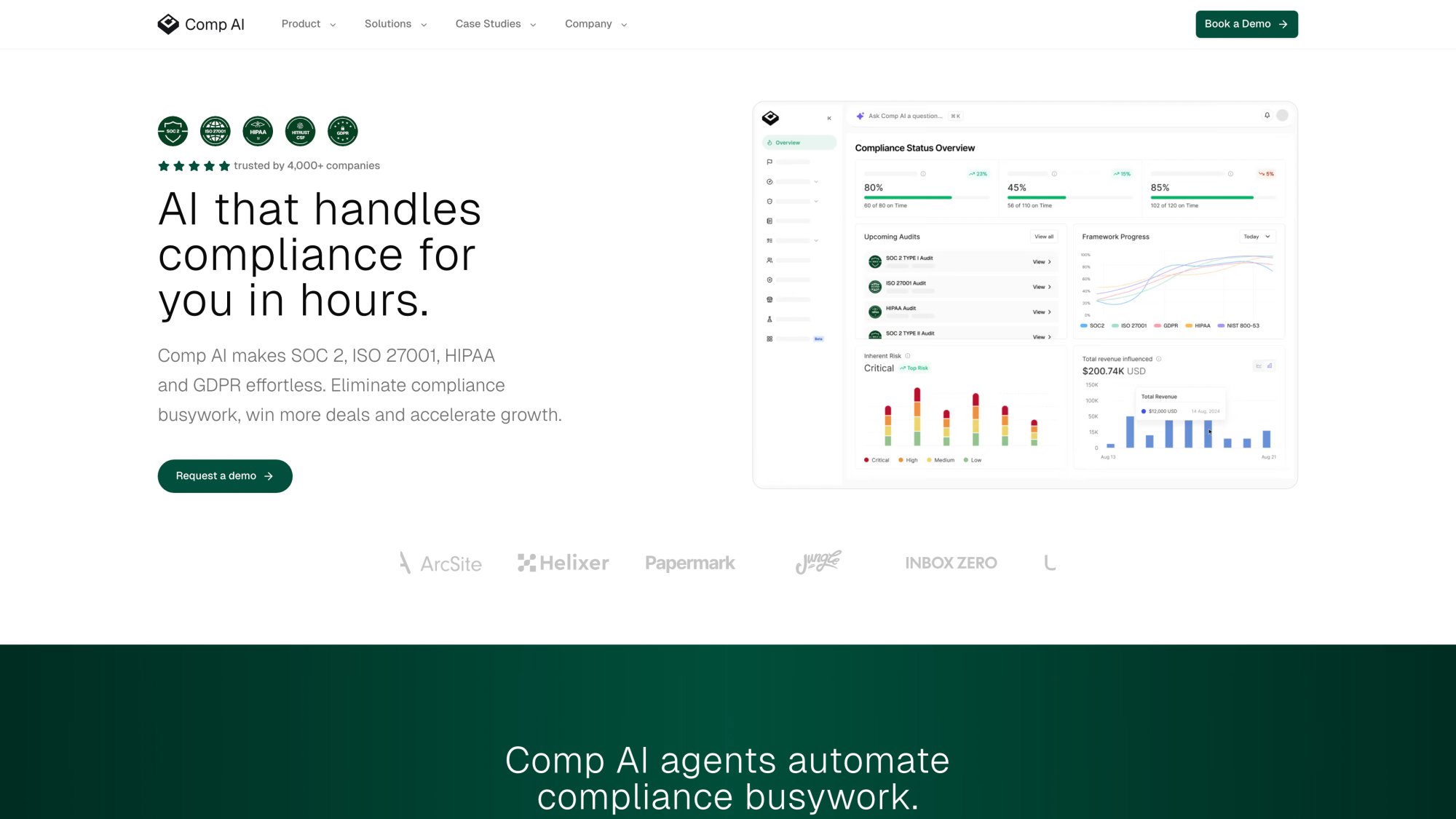
Here's what makes the difference:
How AI-Powered Evidence Collection Works
Our AI agents connect to your existing infrastructure and continuously collect evidence in the background. AWS configurations, GitHub commit histories, Google Workspace access logs, identity provider settings. Instead of engineers spending hours gathering screenshots, the evidence is already there when you need it.
We've automated 80%+ of evidence collection, which is why companies can go from zero to audit-ready in hours instead of months.
What Done-For-You SOC 2 Service Includes
This isn't a self-serve platform where you're left figuring things out alone. When you start with Comp AI, you get a dedicated compliance team that handles the heavy lifting. We write your policies. We configure your controls. We coordinate with auditors. You focus on your business.
As one customer put it: "They took all the complexity out... allowing me to focus on growing my business."
Getting Fast SOC 2 Support via Slack
Have a question about a specific control? Wondering if something will pass audit? Our team responds within five minutes on Slack, during business hours. No support tickets. No waiting days for answers. Real compliance experts available when you need them.
Finding Pre-Vetted SOC 2 Auditors
Finding a good auditor can take weeks. And working with an auditor who doesn't understand startups can drag your timeline out even further. We've built relationships with auditor partners who understand fast-moving companies and can work on startup timelines.
The 100% Audit Success Guarantee
We have a 100% audit success rate. Every single company that has gone through our process has passed their audit.
Real SOC 2 Success Stories
Here's what this looks like in practice:
One of our customers, Persona AI, came to us after spending three months with another platform. They were only 30% through their compliance process and running out of time.
"We were only 30% of the way to SOC 2 with them when our timeline was running out. Comp AI got us certified in 3 weeks." - Abraham Rascon, CTO at Persona AI
That's the difference between a platform that automates versus one that still leaves you doing the work.
When Should Startups Start SOC 2? A Stage-by-Stage Guide
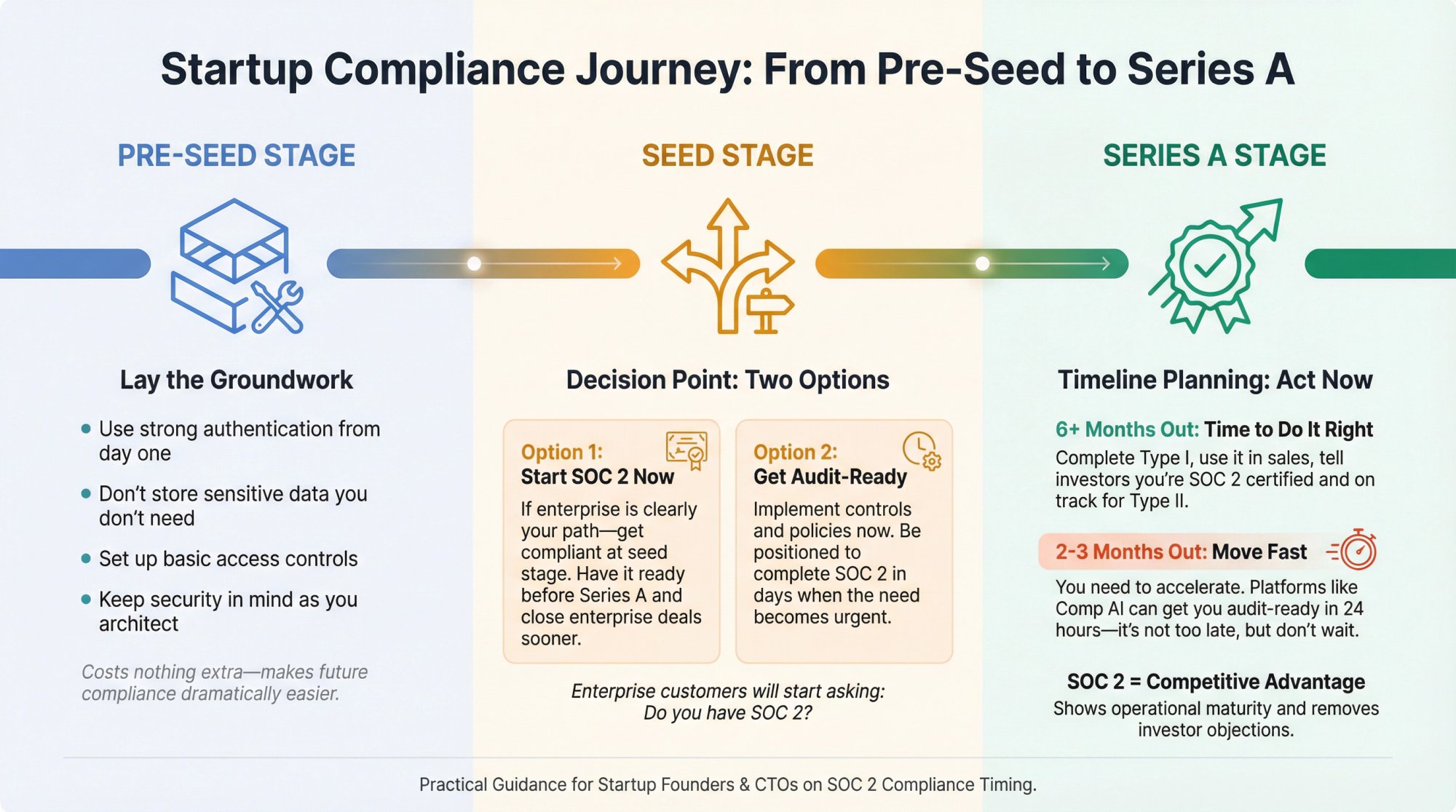
Timing matters. Here's how to think about SOC 2 at different stages. Our SOC 2 timeline calculator can help you map out the specifics for your situation.
Pre-Seed Stage SOC 2 Considerations
At this point, formal SOC 2 certification is usually overkill. You're still figuring out product-market fit. But you can lay the groundwork:
- Use strong authentication from day one
- Don't store sensitive data you don't need
- Set up basic access controls
- Keep security in mind as you architect
This costs nothing extra and makes future compliance dramatically easier.
Seed Stage SOC 2 Decision Framework
This is when the compliance question starts to matter. If you're targeting enterprise customers, you'll start hearing "do you have SOC 2?" in sales calls.
Two options make sense here:
Option 1: Start SOC 2 now. If enterprise is clearly your path, getting compliant at seed stage means you'll have it before you need it for Series A. You'll also be closing enterprise deals sooner.
Option 2: Get audit-ready. Even if you don't complete the full audit, implementing the controls and policies puts you in position to complete SOC 2 in days when the need becomes urgent. Our SOC 2 readiness assessment can show you exactly where you stand.
Series A SOC 2 Timeline Planning
If you're 6+ months out from Series A, you have time to do this properly. Get your Type I done, use it in sales, and be able to tell investors "we're already SOC 2 Type I certified and on track for Type II."
If you're 2-3 months out and don't have SOC 2, you need to move fast. This is exactly why we built Comp AI to work on compressed timelines. It's not too late, but you can't wait. In urgent situations, our emergency SOC 2 compliance track is designed for exactly this scenario.
How SOC 2 Gives You a Competitive Advantage
Most founders don't consider this: SOC 2 can be a differentiator against other startups competing for the same Series A investors.
When an investor is comparing two similar companies, and one has demonstrated operational maturity through SOC 2 certification while the other hasn't thought about compliance, that influences perception. It signals that you're building a company, not just a product.
How to Use SOC 2 in Investor Conversations and Sales
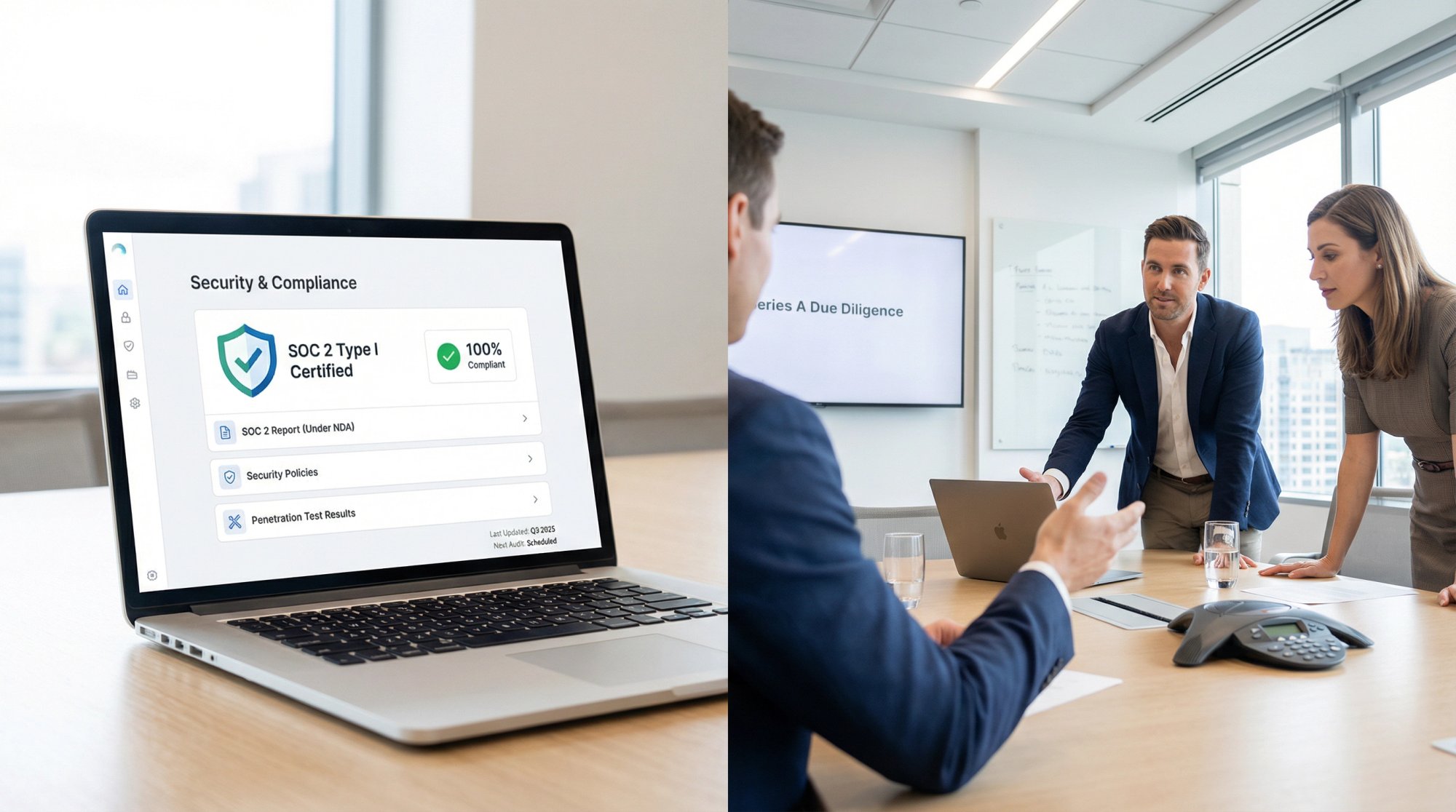
SOC 2 isn't just a checkbox. Used correctly, it becomes part of your story.
Talking About SOC 2 With Investors
When the compliance question comes up in due diligence, you want to be proactive rather than reactive. Instead of "we're working on it," you want to say:
"We completed our SOC 2 Type I three months ago. Our controls have been operating continuously since then, and we're on track for Type II completion in Q3. Here's our trust center where you can see our security posture."
That's a completely different conversation. You've demonstrated execution. You've shown that you understand what enterprise customers will require. And you've eliminated a potential objection before it could slow down your raise.
Using SOC 2 to Close Enterprise Deals Faster
Your trust center becomes a sales asset. Instead of waiting for security questionnaires and scrambling to fill them out, you can proactively share:
- Your SOC 2 report (under NDA)
- Real-time compliance status
- Security policies and procedures
- Penetration test results
Enterprise buyers appreciate this. It shows you take security seriously and makes their job easier. Some Comp AI customers report that having a professional trust center has shortened their sales cycles by weeks.
Positioning Your AI Startup as Security-First
For AI companies especially, security positioning matters. Customer data is your product's lifeblood. Demonstrating that you protect it carefully builds the trust needed for enterprise adoption.
SOC 2 gives you a concrete, third-party-verified way to make that claim. "We're SOC 2 certified" carries more weight than "we take security seriously."
Frequently Asked Questions
How long does SOC 2 actually take?
Traditional timeline: 6 to 12 months for most companies doing it manually or with basic tooling.
With Comp AI: As little as 24 hours to be audit-ready. The actual audit typically takes 2 to 4 weeks after that, depending on auditor availability.
The difference comes down to automation. We've eliminated the manual evidence collection and policy writing that traditionally consumes months of work.
What's the SOC 2 observation period?
For Type II, auditors need to observe your controls operating over a period of time, typically three to six months. Type I doesn't require an observation period, which is why it's faster.
If you need Type II, you can complete Type I first (for immediate credibility), then begin your observation period. Your Type II audit happens after the observation period concludes.
Do investors actually ask about SOC 2?
Increasingly, yes. It's becoming a standard due diligence question, especially for:
- Startups handling customer data
- AI and ML companies
- B2B SaaS targeting enterprise customers
- Healthcare, fintech, or other regulated industries
Even if your specific investors don't ask, having SOC 2 removes a potential objection and signals operational maturity.
Type I or Type II: which do I need?
For Series A, Type I is usually sufficient. It proves your controls are properly designed. Many enterprise customers and investors will accept Type I, especially if you can show you're working toward Type II.
Type II becomes more important as you move into larger enterprise deals (Fortune 500 customers) or regulated industries where Type II is specifically required.
How much engineering time does SOC 2 require?
Traditional approach: 200 to 600+ hours of engineering time for initial compliance.
With Comp AI: Minimal engineering involvement. Our team handles setup and configuration. Your engineers might spend a few hours total on compliance-related tasks.
We've saved customers 2,500+ hours of work that would have otherwise fallen on their engineering teams.
What does SOC 2 cost for a startup?
Price with Comp AI: Starting at $8,000 (includes platform, support, and audit)
Price with others: $25,000 to $50,000+ for platform and audit combined
Traditional consultant-led approaches can run $50,000 to $100,000+ when you factor in all costs.
Can I get SOC 2 if I'm not yet profitable?
Absolutely. SOC 2 is about your security controls and practices, not your financial performance. Many of the companies we work with are pre-revenue or early-revenue startups.
In fact, getting SOC 2 early often helps you become profitable faster by unlocking enterprise deals.
What if I fail the audit?
With Comp AI, our customers have a 100% audit success rate. We don't send you to audit until you're ready, and we work with auditors who understand our process.
That's how confident we are in our approach.
Will my SOC 2 report be accepted by customers?
Yes. SOC 2 audits are conducted by licensed CPA firms according to AICPA standards. The report format and attestation is the same regardless of which platform you used to prepare. Customers care about the end result: a valid SOC 2 report from a reputable auditor.
How do I maintain SOC 2 compliance after the initial audit?
SOC 2 isn't one-and-done. You need to maintain your controls and go through annual audits.
With Comp AI, continuous monitoring happens automatically. Our AI agents keep collecting evidence, flagging potential issues, and ensuring you stay compliant year-round. When audit time comes around again, you're already prepared.
Get SOC 2 Before Your Series A Starts
Getting SOC 2 before Series A is one of the highest-leverage moves you can make as a founder. It accelerates enterprise deals. It strengthens your position with investors. And it builds the security foundation you'll need as you scale.
The old excuses don't apply anymore. It doesn't have to take a year. It doesn't have to cost six figures. And it doesn't have to drain your engineering team.
Comp AI has helped over 4,000 companies get compliant fast. Our AI-powered platform handles the heavy lifting while our team of compliance experts guides you through the process.
If you're approaching Series A and enterprise deals are part of your growth plan, the time to start is now.
Book a demo with Comp AI and see how fast compliance can actually be.